
How Safe Are Mercedes-Benz Vehicles?
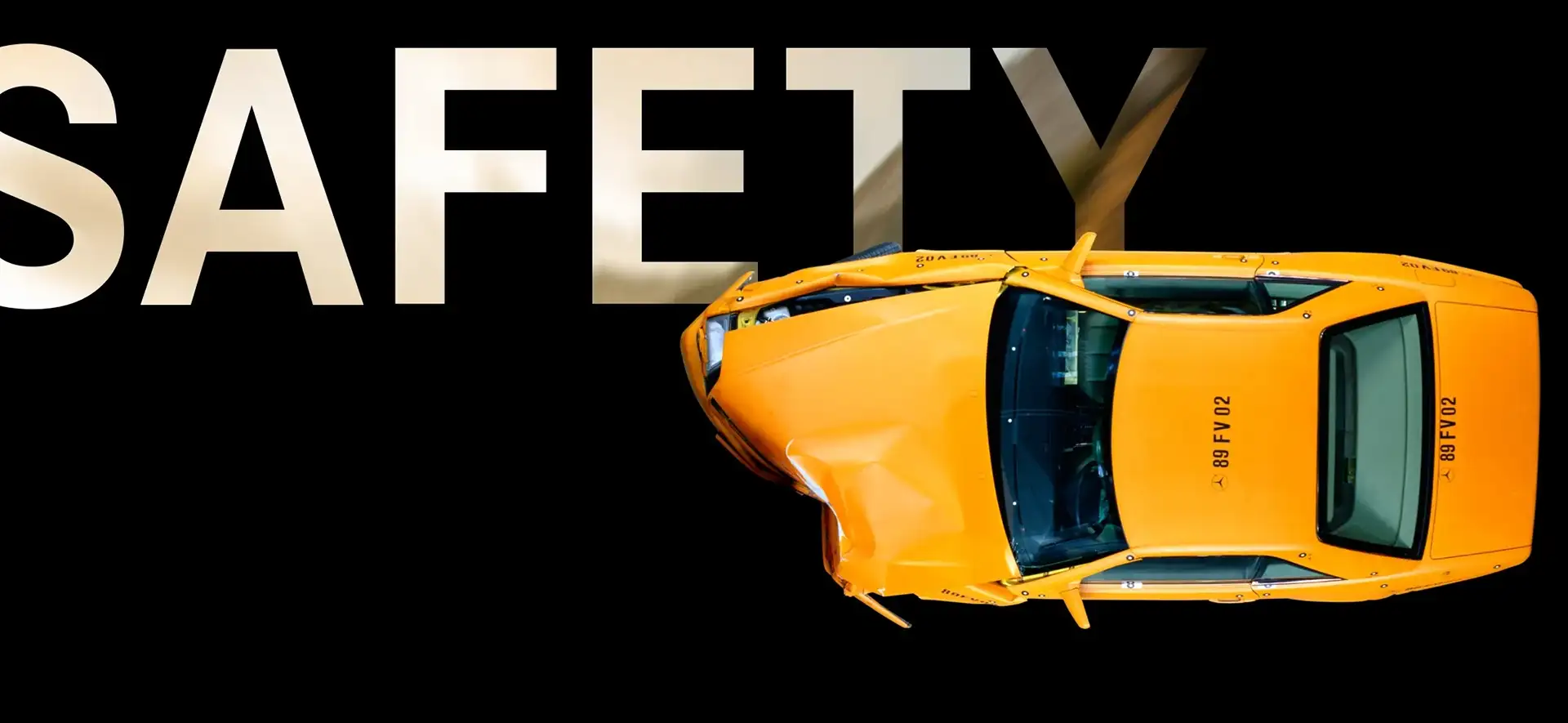
Summary: Mercedes-Benz vehicles are among the safest you can buy — not because of any single feature, but because the brand invented much of the safety technology the entire automotive industry now relies on. The crumple zone, the airbag, ABS braking, and electronic stability control all originated with Mercedes-Benz, reflecting a safety-first philosophy baked into the company since its earliest days. Today that legacy continues through systems like PRESAFE® (which braces occupants before a collision even occurs), Active Brake Assist with pedestrian detection, and Drive Pilot — the world’s first legally approved Level 3 automated driving system that allows drivers to take their eyes off the road under certain conditions. The key caveat: these technologies amplify attentive driving; they don’t replace it.
What to expect from Mercedes-Benz for safety.
If you’re considering a Mercedes-Benz, you’ve probably already thought about the luxury, the performance, and the prestige. But one question we hear consistently at RBM of Atlanta is this: how safe are these cars, really?
As the first Mercedes-Benz dealer in the state of Georgia — we’ve been selling and servicing these vehicles since 1964 — we’ve had a front-row seat to more than six decades of safety innovation. We’ve also heard the stories firsthand: customers who walked away from accidents they shouldn’t have, families who tell us the car saved their lives. So when someone asks us about Mercedes safety, we don’t have to guess. We have the history, the knowledge, and the real-world experience to give you a real answer.
The short version? Mercedes-Benz doesn’t just make safe cars. They invented modern vehicle safety.
Mercedes-Benz and the History of Automotive Safety
Most people don’t realize how deep Mercedes-Benz’s roots in safety actually go. This is a brand that holds over 39,000 patents worldwide, and a significant portion of those are tied directly to safety innovations. To put that in perspective: the anti-lock braking system (ABS) that now appears in virtually every car on the road? Mercedes-Benz pioneered it.
The crumple zone, the airbag, the electronic stability program — these aren’t features Mercedes borrowed from somewhere else. They’re technologies Mercedes developed and then shared with the broader automotive industry because they believed these innovations should protect everyone, not just their own customers.
That philosophy has never changed. It’s baked into the company’s DNA, and it’s something we’ve witnessed play out vehicle after vehicle over the past 60-plus years.
The Safety Technologies That Actually Matter
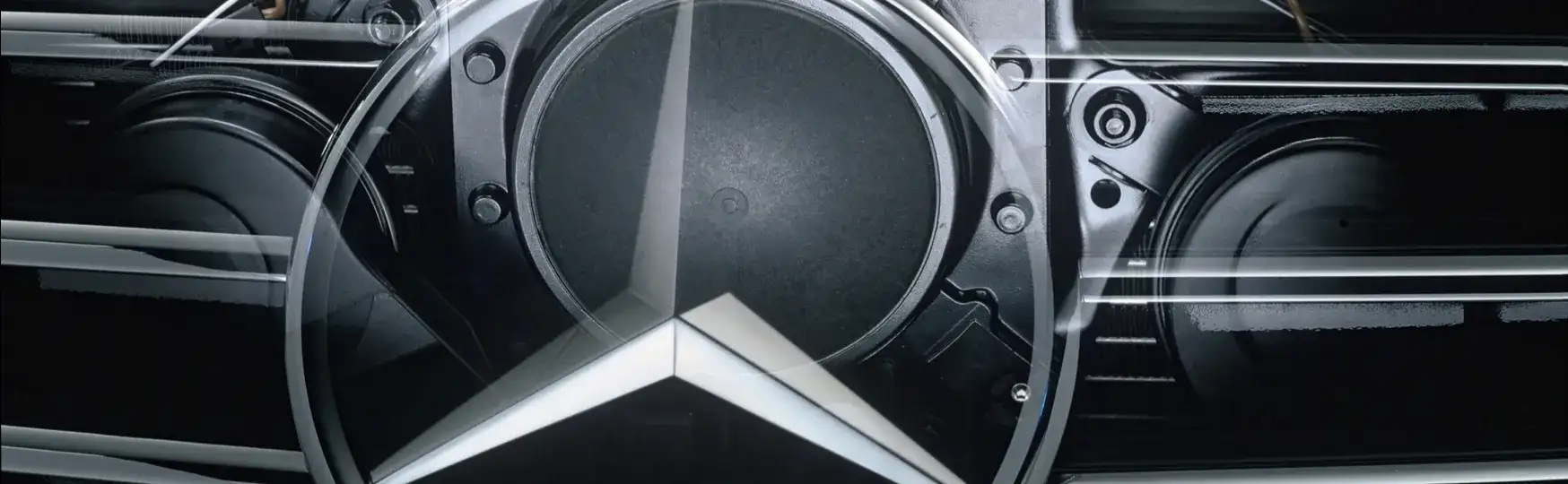
When customers come into RBM of Atlanta and start asking about safety features, the conversation usually goes well beyond a simple feature checklist. Mercedes doesn’t just pile technology into their vehicles — they build interconnected systems that work together. They call this suite of technologies Intelligent Drive, and it represents some of the most sophisticated safety engineering available in any production vehicle today.
Here are the features that consistently generate the most conversation on our showroom floor:
- PRESAFE® — This patented system uses sensors to anticipate a collision before it happens. In the moments leading up to an impact, seatbelts tighten, headrests adjust, and windows close automatically. In newer vehicles, PRESAFE® even emits a specific pink noise frequency that triggers the inner ear’s protective reflex, reducing hearing damage from the pressure of impact. It’s an extraordinary detail that most people have never heard of.
- Active Distance Assist DISTRONIC® — This adaptive cruise control system doesn’t just maintain your speed. It maintains a safe following distance, slowing and stopping with traffic and resuming when the road clears. It acts as a genuine second set of hands.
- ATTENTION ASSIST® — Long drives cause fatigue, and fatigue causes accidents. ATTENTION ASSIST® monitors how you interact with the steering wheel and detects the subtle corrections that indicate drowsiness. When it senses you’re getting tired, it alerts you to take a break.
- Active Brake Assist — Since 2012, more than 10 million Mercedes-Benz passenger cars sold worldwide have included pedestrian emergency braking. If you’re approaching a person or an obstacle and not braking hard enough, the system can apply additional force or brake autonomously.
- Night View Assist® PLUS — Using infrared beams and a dedicated camera, this system gives you a real-time view of the road ahead in the dark, and can even highlight and illuminate pedestrians your headlights might not yet reach.
And then there’s Drive Pilot.
Drive Pilot: The Feature That Changes Everything
When we talk about where Mercedes-Benz safety is heading, Drive Pilot is the clearest signal of the future. Mercedes-Benz became the first manufacturer in the world to receive regulatory approval allowing a driver to legally take their eyes off the road while driving. Not hands-free — eyes-free, under specific conditions.
This is a Level 3 conditionally automated driving system, and the fact that Mercedes earned that approval — while competitors are still working toward it — reflects something important about how they approach technology. They didn’t rush to be first with touchscreens or smartphone integration. They waited. They built redundancy into every critical system: braking, steering, electrical, positioning. They submitted to the testing and scrutiny required to earn the trust of regulators. And then they launched.
That patience is a pattern we’ve seen repeat itself over the decades.
Technology Amplifies Good Drivers. It Can’t Replace Them.
This is something we talk about honestly with every customer: Mercedes-Benz vehicles are extraordinarily safe, but they’re designed to work with an attentive driver, not instead of one.
Here’s a real example of how this plays out. Imagine you’re driving down the highway and traffic ahead of you has slowed to a stop. Active Brake Assist is monitoring the situation. If you hit the brakes — even if you don’t brake hard enough — the car can sense that and apply additional pressure to help you stop in time.
But if you hit the gas instead of the brake? The car interprets that as a conscious decision. It assumes you know something it doesn’t. And it gets out of the way.
The system isn’t broken in that scenario. It’s doing exactly what it’s designed to do: respect driver intent. The problem isn’t the technology — it’s distraction, panic, or inattention. Distracted driving can negate even the most sophisticated safety systems, because those systems are built on the assumption that you’re engaged with the road.
Mercedes-Benz safety features enhance what a good driver is already doing. They give you more time to react, more braking force when you need it, more awareness of what’s around you. They are not a substitute for driving responsibly.
What Our Customers Have Experienced
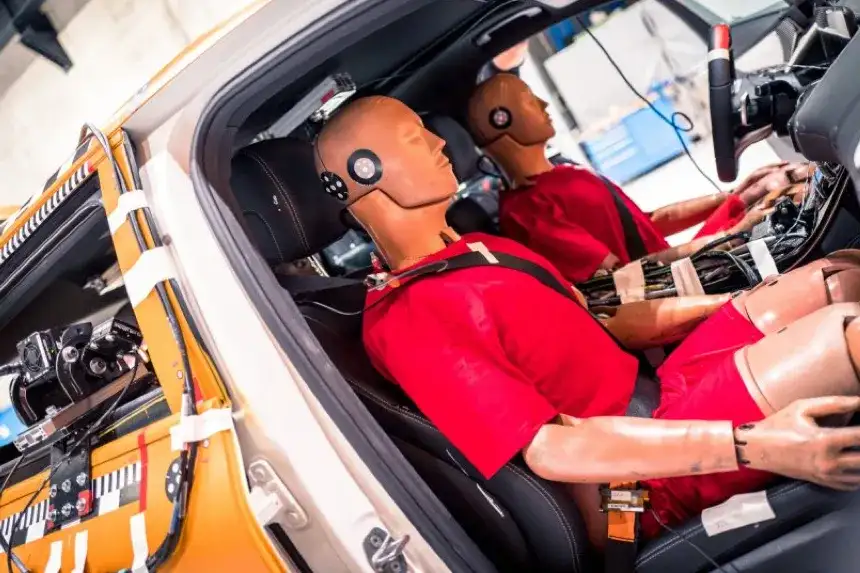
Over six decades at RBM of Atlanta, we’ve heard stories that stay with you. Customers who’ve called us after an accident to say they’re alive because of the car they were driving. Families who attribute their survival — of head-on collisions, rear-end impacts, rollovers — to the engineering that surrounded them at the moment of impact.
Mercedes-Benz USA has documented some of these stories in their Impact Stories series, a collection of unscripted, first-person accounts from drivers and families who lived through serious accidents in Mercedes-Benz vehicles. These aren’t testimonials crafted by a marketing team. They’re real people describing what they saw, what they felt, and what they believe saved them.
The stories echo what we hear in our own showroom. A pregnant woman and her husband. A star athlete. A family dragged by an 18-wheeler. An engaged couple struck from behind. These are the moments where the engineering decisions Mercedes made — decisions made years or even decades before that accident — actually mattered.
Why Mercedes Doesn’t Just Chase “First”
One of the things that separates Mercedes-Benz from other manufacturers is their willingness to be second, or third, or even later — when being first would mean compromising safety.
They weren’t the first brand to offer Apple CarPlay. They weren’t the first to put large touchscreens in their vehicles. And that was intentional. They waited until the screen technology was good enough, and until they could integrate those features in ways that didn’t add distraction or introduce new risks. Their safety ethos isn’t a department. It’s a filter that every feature passes through before it reaches the vehicle.
That approach has defined how they’ve operated since the beginning, and it’s a big part of why we’ve been proud to represent this brand for over 60 years.
What the Future of Mercedes Safety Looks Like
The pace of innovation isn’t slowing down. Mercedes-Benz has made clear that safety leadership is not a position they intend to give up. The continued development of automated driving technology, expanded applications of Drive Pilot, smarter accident prediction systems, and deeper integration of real-world accident data into vehicle design — all of it points toward vehicles that are meaningfully safer with each generation.
Their in-house accident investigation team — based in Stuttgart — has been gathering and analyzing real-world crash data for over 50 years. That data feeds directly back into engineering decisions. It’s how ATTENTION ASSIST® was developed. It’s how PRESAFE® Brake came to exist. The feedback loop between the road and the design floor is one of the most important advantages Mercedes has, and it’s one that gets more valuable with every passing year.
The Bottom Line
So, how safe are Mercedes vehicles?
Safer than almost anything else you can buy. Not because of any single feature, but because of a company-wide commitment that predates most of the other manufacturers making safety claims today. Mercedes-Benz didn’t add safety to their vehicles — they built their vehicles around safety. That distinction matters.
At RBM of Atlanta, we’ve watched this brand evolve for over 60 years, and the commitment has never wavered. If anything, the ambition has grown. The question isn’t whether a Mercedes is safe. The question is whether you’re ready to drive one.
RBM of Atlanta has been a Mercedes-Benz dealer since 1964 and was the first Mercedes-Benz dealer in the state of Georgia.
Discover Your Next Vehicle at RBM of Atlanta Mercedes Benz
Our team at Mercedes Atlanta is dedicated to providing a luxury, no pressure, at your pace sales experience. Find out why we’re a 9 time Mercedes-Benz Best-of-the-Best Award winner and a 9 time JD Power Dealer of Excellence distinction winner.
- See current vehicle special offers for new and pre-owned vehicles
- Secure and simple, online finance application process
- A team of highly experienced and tenured technicians to service your Mercedes-Benz

0 comment(s) so far on How Safe Are Mercedes-Benz Vehicles?